


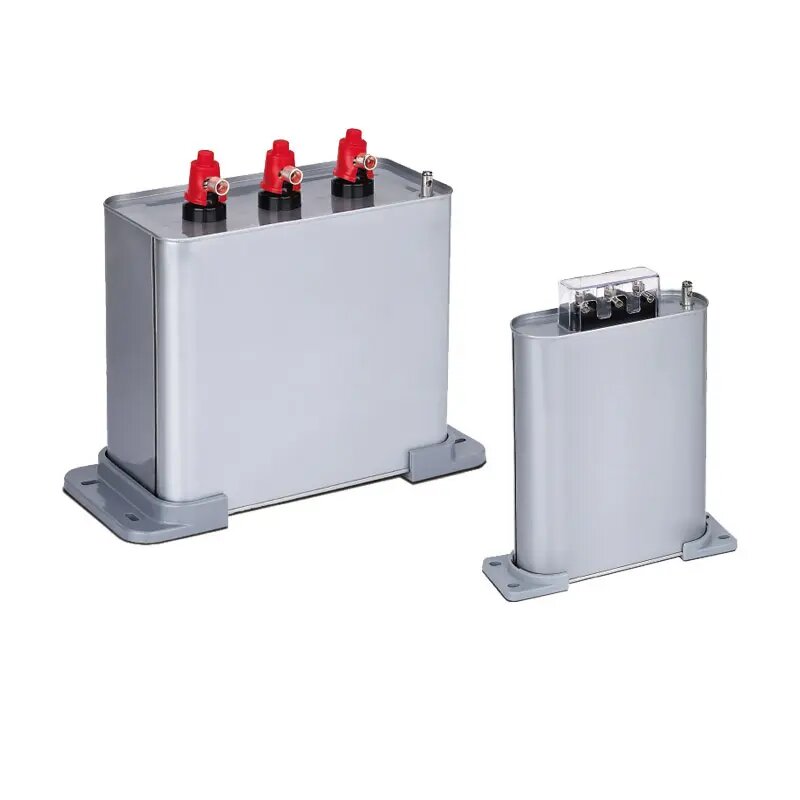
A Power Capacitor is an electrical component that stores energy in an electric field. In an industrial or commercial setting, its primary job is not long-term storage but rather Power Factor Correction.When you understand the uses of a power capacitor, you understand how to make your electrical system more efficient, safer, and less expensive to run.
1. Reducing Electricity Bills (Power Factor Correction)
The most common and financially beneficial use of a Power Capacitor is to correct poor power factor. Most industrial loads (like motors, transformers, and welders) consume two types of power:
◆Active Power (kW): The power that actually does the work.
◆Reactive Power (kVAR): The power required to magnetize the equipment.
Utility companies often charge penalties if your facility draws too much reactive power. By installing a bank of Power Capacitors, you generate the reactive power locally. This reduces the amount drawn from the grid, lowers kVA demand, and eliminates penalty fees—often paying for the equipment within a year.
2. Increasing System Capacity (Releasing “Hidden” Power)
Do you have a facility that has “run out of power” but still needs to add new machinery? Before upgrading the main transformer (which is expensive), consider the use of power capacitors.
By improving the power factor, capacitors reduce the current flowing through transformers and cables. This reduction in current frees up electrical capacity. Essentially, power capacitors allow you to add more loads to an existing system without paying for a utility upgrade.
3. Reducing Voltage Drops (Stabilizing Power)
In long cable runs or heavily loaded plants, voltage drops can occur. Low voltage causes lights to dim and motors to run sluggishly or overheat.
Power Capacitors act as local energy reserves. They release energy to support the voltage during peak demand, ensuring that sensitive equipment receives stable, consistent power. This leads to fewer production stoppages and less equipment damage.
4. Reducing Line Losses (Heat Reduction)
Electrical current flowing through resistance creates heat (I²R losses). The higher the current, the hotter the cables get, and the more energy is wasted as heat.
Because a Power Capacitor reduces the total current in the circuit (by cancel out the “wasteful” part of the current), it directly reduces these thermal losses. This not only saves energy but also extends the lifespan of cables and switchgear by keeping them cooler.
5. Improving Power Quality in Renewable Systems
With the rise of solar and wind power, the use of power capacitors has expanded into green energy. Inverters used in solar systems can sometimes inject harmonics or cause instability. Capacitors help filter this noise and stabilize the grid connection, ensuring the renewable energy is clean and usable.
Choosing the Right Power Capacitor
When searching for a Power Capacitor, you are not just buying a component; you are buying reliability. A failed capacitor can mean production downtime, fire risk, or blown fuses. You need a unit that can handle the electrical and thermal stresses of daily switching.
This is where the quality of manufacturing becomes critical. We recommend looking for capacitors that feature overpressure disconnection systems (to guarantee safety at end-of-life) and self-healing properties (to withstand surges).
Why Consider Hengyi Electric?
For buyers looking for a trusted manufacturer, Hengyi Electric is a reliable partner. Their range of low and high voltage Power Capacitors is designed specifically to handle the harsh conditions of industrial environments.
Post time: Mar-04-2026