


To successfully repair or maintain electrical appliances (particularly electric motors), knowing the details of a start capacitor is crucial. Whether you are a technician who has been doing this for years or you are an amateur, this guide will help you learn about start capacitors and their types. You will also find valuable information on how to test and replace this component.
What Is a Start Capacitor and How Does It Work?
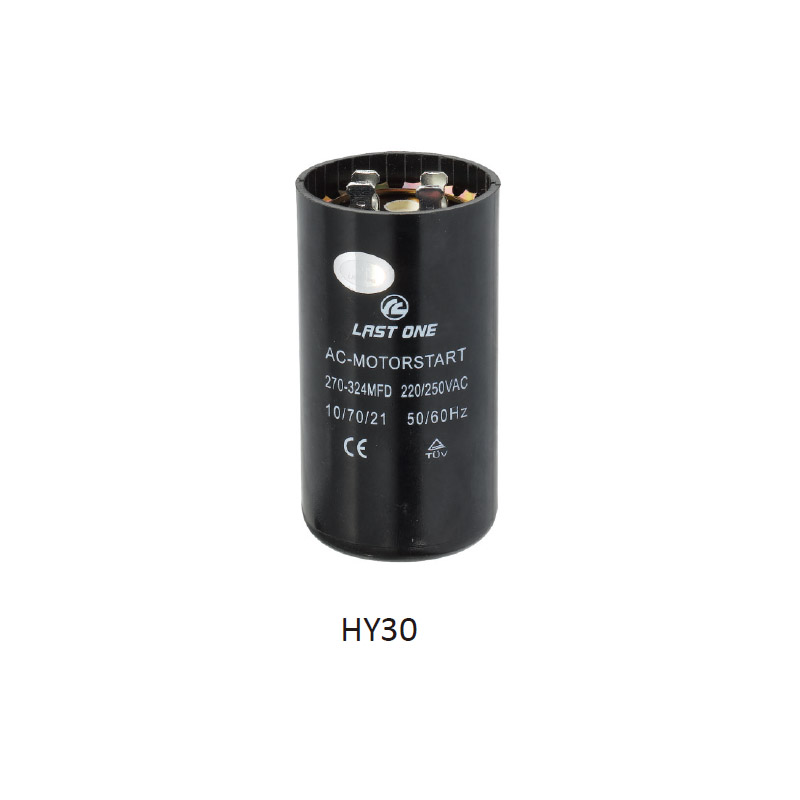
A start capacitor is an important element in single-phase motors and it is used to provide the required torque to begin the movement of the motor. Normally, these capacitors are temporary devices that work only for a short time at the moment of starting. Once the motor gets to a certain speed, it becomes disconnected from the electrical circuit which helps the motor work well without the load. In short, the starting motor capacitor helps to generate enough electrical energy required to overcome the inertia and to initiate the motor operation.
One type of capacitor is the start capacitor which is typically used in single-phase AC motors such as used in household appliances including air conditioners and refrigerators. The reason behind using the start capacitors is that these capacitors can withstand voltage ratings ranging from 110VAC to 330VAC as well as capacitance values varying from 21μF to 12800μF of capacitance. The tolerances associated with capacitance range from -0% to +20%. The capacitors operate in frequency ratings of around 50/60 Hz.
Types of Start Capacitors Explained
There are various types of start capacitors, each being used for different applications. Below mentioned are the common types of start capacitors.
●Electrolytic Capacitors: These are the start capacitors that are widely used in many devices. They have high capacitance values and are usually polarized which can be used in small electric motors.
●Non-Polarized Capacitors: Unlike electrolytic capacitors, these can be used in any position and are commonly used in applications where the engine turns in both directions.
●Motor Run Capacitors: Although not a start capacitor in the strictest sense, motor run capacitors are still in circuit during use and help enhance efficiency.
Step-by-Step Start Capacitor Testing Guide
It is important to test a start capacitor for diagnosing problems in a motor. Here’s a basic guide to assist you in this situation.
1. Safety First: Turn off the power supply to the motor and ensure it is completely disconnected.
2. Release the Charge of the Capacitor: The next step is to discharge the capacitor with care by using a resistor. This is necessary to prevent the risk of electric shock.
3. Employ Multimeter: Set the multimeter to the capacitance checking mode. Connect the leads to the capacitor terminals and take a reading.
4. Evaluate the Findings: After obtaining your results, compare them against the specifications found on the capacitor. A large discrepancy can indicate that the capacitor is defective.
5. Physical Inspection: Look for signs of damage, such as swelling or leakage, which validates that replacement is required.
How to Replace a Faulty Start Capacitor
If you have made a decision that your start capacitor is broken, the replacement procedure is simple:
1. Buy the Correct Capacitor: Make sure that the new capacitor has the same specifications as the old one (voltage rating and capacitance).
2. Ensure safety: again, safety is key. Always ensure power is disconnected before beginning the replacement.
3. Extract the Faulty Capacitor: Next step is to salvage the faulty capacitor while taking note of how it is attached. Taking a picture of the connection will help when installing the new one.
4. Set up the New Capacitor: Attach the new capacitor in the same way the old capacitor was attached, as well as tightly.
5. Motor Testing: When everything has been correctly installed, switch on the electricity and make sure the motor works properly.
Conclusion
A start capacitor is an important part of a motor that you should know about for proper maintenance. Understanding how to test or replace a faulty capacitor can help you save money and minimize the time spent on repairs. Always make sure you act safely during electrical work, and consult an expert if you are not sure what to do. Such appliances as refrigerators and air conditioners rely heavily on the presence of the capacitor, as this component can work in a great variety of voltages and sizes.
Post time: Jul-15-2026