


A common question that motor fans, technicians, and DIYers often ask themselves is if they can run an electric motor without a capacitor. To determine the answer to this query; we must explore how capacitors work with electric motors, what their role is, and whether there are ways to run a motor without one. This article discusses the importance of motor capacitors, as well as related questions such as Do electric motors require capacitors?, and Can a single-phase motor operate without a capacitor?
Understanding Motor Capacitors’ Function
A motor capacitor is a device that stores and releases electricity, which is required to kick off (starting), and maintain (running), an electric motor. Capacitors are most often used in single-phase induction electric motors because these types of motors produce a rotating magnetic field through the use of an auxiliary winding. If a motor does not use a capacitor, the auxiliary winding will not have the necessary phase shift to start the motor.
There are two primary motor capacitor types:
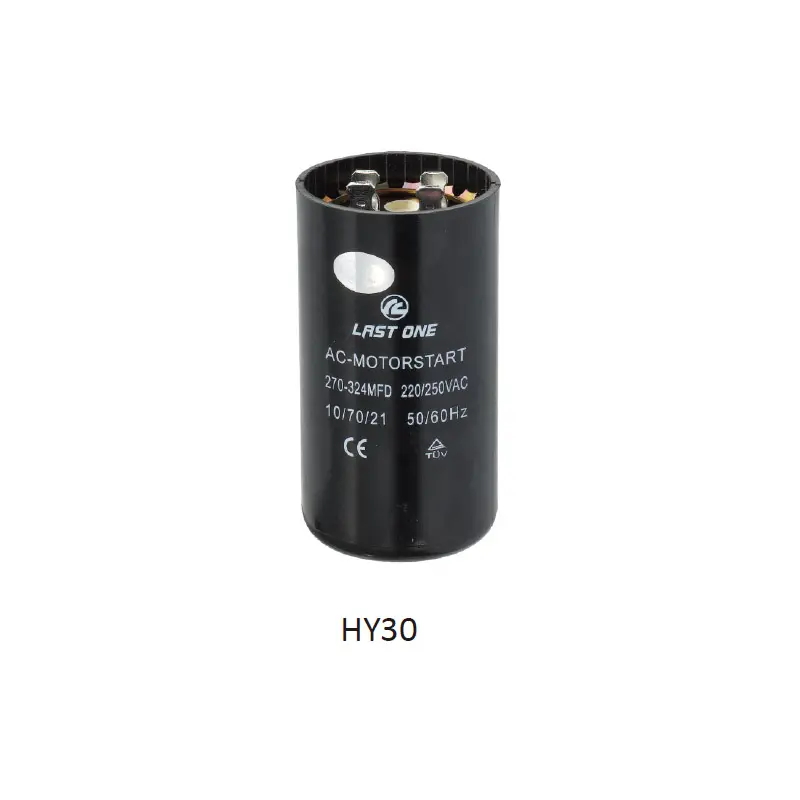
●Start Capacitor: Supplies the initial electrical energy to kick off (starting), an electric motor.
●Run Capacitor: Provides the motor with a consistent operational speed and efficient performance during normal operation.
Capacitors are critical in the operation of an electric motor because they help ensure the operation of an electric motor in a smooth manner for its entire life. If an electric motor has no capacitor, the result will be an inefficient operation, overheating, or failure to start or operate altogether.
Can a Motor Operate Without a Capacitor?
While all electric motors will not require capacitors to operate, there are some types of electric motors (specifically three-phase) which do not require the use of capacitors for their operation.
Single-phase motors typically require a running or starting capacitor to operate. For example, attempting to run a single-phase motor without a starting capacitor is usually not feasible. If the motor starts at all, it will fail to function efficiently and may experience reduced torque and unstable performance. Motors requiring a running capacitor often face challenges without it, as adequate torque cannot be achieved.
Meanwhile, there are exceptions for specialized motors, such as shaded-pole motors or permanent split capacitor motors, that function without a starting capacitor but may still rely on a running capacitor.
Three-phase motors are designed to operate naturally without requiring capacitors. These multi-phase motors naturally generate a rotating magnetic field and are self-starting.
Smart Capacitors and Motor Technology
With advancements in technology, Smart capacitors have become available to enhance motor reliability and performance. These systems automatically adjust the capacitor‘s capacity based on motor operation needs, improving energy efficiency and minimizing overheating.
If you wish to upgrade or resolve problems caused by traditional motor capacitors, exploring smart capacitor systems could prove beneficial, especially in demanding industrial or high-performance settings. Consult a professional to evaluate these options.
Common Motor Capacitor Frequently Asked Questions
Does a motor need a capacitor?
Three-phase motors can operate without capacitors, while single-phase motors typically cannot. The capacitor is an essential component for single-phase motors to start and function properly.
Can a motor run without a capacitor?
Some specialized motors may not require capacitors, but the majority of single-phase motors rely on them for effective operation.
Can I run my single-phase motor without a capacitor?
No, single-phase motors that are designed to utilize capacitors cannot function correctly without them. Attempting to run such motors without a capacitor may result in inefficiency or damage.
How to Proceed If Your Motor Capacitor Fails
If your motor‘s capacitor fails, you may notice issues such as a failure to start, strange noises, loss of performance, or overheating. Replacing the faulty capacitor promptly is often a straightforward solution. Ensure the replacement matches your motor‘s specifications to prevent further complications.
For industrial or high-performance applications, investing in smart capacitor systems can improve reliability and efficiency. Consult experts or suppliers to explore these solutions for your needs.
Understanding the role of capacitors in motors and maintaining them can prevent unexpected breakdowns, extend the motor‘s lifespan, and ensure stable operation even with fluctuating loads.
Summarize
Depending on the type of motor, whether it can operate without a capacitor varies. Three-phase motors function naturally without capacitors, while single-phase motors generally depend on them for smooth and efficient operation. Attempting to run a single-phase motor without a capacitor can lead to inefficiency, damage, or failure to start. Regularly maintaining and timely replacing motor capacitors is critical to extending motor life and improving operational efficiency.
Post time: Apr-08-2026