


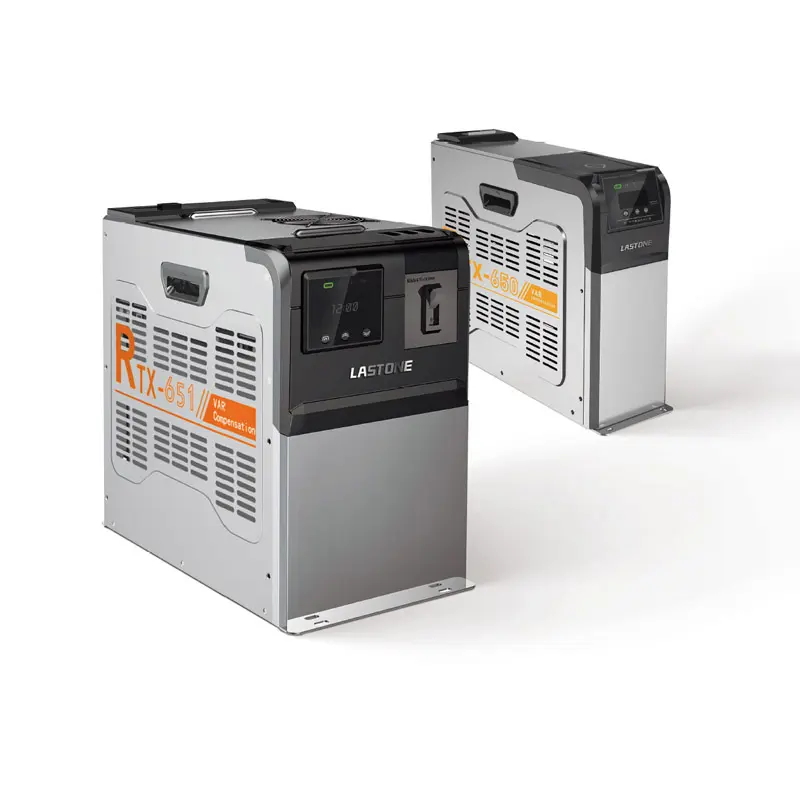
Capacitors handle intermittent duty just fine. The real concern is longevity. Repeated on-off cycling stresses standard units, leading to early failure. An intelligent capacitor solves this by managing switching events with built-in protection. It monitors conditions and engages safely, extending service life and safeguarding your equipment during frequent starts and stops.
The Hidden Stress of Starting and Stopping
Capacitors are not like light bulbs. They don’t typically fail during steady, continuous operation. They fail during the transitions. When a capacitor sits idle and then suddenly receives a surge of voltage, the dielectric material inside experiences thermal and electrical stress. Over hundreds or thousands of these cycles, tiny imperfections can grow into real problems.
This is particularly true in power factor correction applications. A traditional fixed capacitor bank connected to a motor that starts and stops frequently will see repeated inrush currents. Each switch-on event sends a spike through the windings. An intelligent capacitor approaches this differently. It monitors the line conditions and often employs zero-crossing switching technology. In plain terms, it connects to the circuit at the precise moment when voltage is at its lowest point, dramatically reducing that initial shock. If you need a capacitor to work intermittently for years rather than months, this controlled engagement is not a luxury.
Why Intelligent Switching Matters for Your Bottom Line
From a buyer’s perspective, the appeal of intermittent operation is often about energy savings. Why run a capacitor when the motor is off? But if the capacitor fails prematurely because of those same on-off cycles, any savings disappear into replacement parts and labor.
Here is where an intelligent capacitor shifts the equation. It is designed for cyclic duty.
●Self-Diagnosis: It tracks internal temperature and voltage stress. If conditions aren’t safe for connection, it waits.
●Controlled Discharge: When power is removed, it safely bleeds off residual voltage. This is a critical safety feature for maintenance personnel who might touch the terminals during an “off” cycle.
●Longevity Tracking: Many units record the number of switching operations, giving you a realistic view of remaining service life rather than a guess.
Practical Scenarios Where Intermittent Use Shines
You will find this capability valuable in several common industrial and commercial settings:
●Elevators and Cranes: High power demand for 15 seconds, then minutes of idle time. The capacitor needs to be ready instantly but rest quietly when not needed.
●HVAC Compressors: Seasonal or thermostatically controlled cycling where the unit kicks on and off dozens of times daily.
●Welding Equipment: Massive, short-duration draws followed by cooling periods.
●Solar Inverter Systems: Continuous fluctuation between day and night, or passing cloud cover.
In each of these cases, the capacitor is working intermittently. Using a unit that cannot handle the switching duty cycle leads to swollen cans, blown fuses, and nuisance downtime. An intelligent capacitor provides a buffer against these common failure modes.
A Note on Sizing for Cyclic Loads
One word of caution worth keeping in mind: intermittent operation does not mean you can undersize the capacitor. The electrical stress during the “on” portion of the cycle remains just as high, if not higher due to temperature swings. Always size the unit for the peak kVAR demand, not the average. The intelligence of the device protects the switching event, but it cannot protect against sustained overload.
The Smarter Long-Term Choice
If your application involves frequent cycling, the initial cost difference between a standard fixed capacitor and an intelligent capacitor is often recouped within the first avoided service call. You get a component that understands its own limits, protects itself from the harshness of intermittent starting, and provides clear feedback on its health. That’s the kind of reliability that keeps a process running and a maintenance budget under control.
Post time: Apr-24-2026