


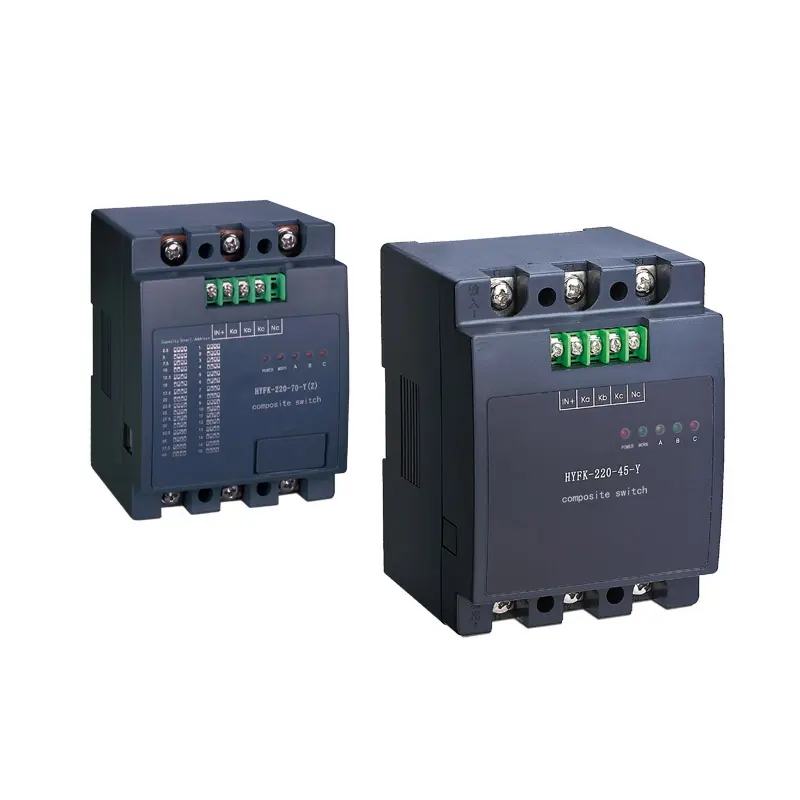
A capacitor contactor is a specialized electrical switching device built to handle the demanding job of connecting and disconnecting power factor correction capacitors. Unlike a standard power contactor, the capacitor switching contactor includes a unique pre-charge mechanism and early-make auxiliary contacts. This design briefly inserts damping resistors into the circuit milliseconds before the main poles close, effectively suppressing the massive inrush currents that would otherwise weld standard contacts or trip upstream breakers.
The Core Function: Managing Inrush Current Safely
Standard contactors rarely survive long-term service on a capacitor bank. This is because a discharged capacitor behaves like a dead short at the exact instant of closure. The resulting inrush current which can momentarily reach 180 times the nominal rating simply overwhelms conventional contacts.
A capacitor switching contactor solves this by staging the connection process. Here is the sequence most electrical engineers rely on:
●Pre-charge: Auxiliary contacts close first, routing current through a set of tungsten-wound damping resistors.
●Damping: The resistors reduce the current spike to a manageable level (typically <70x In).
●Main Close: The main power poles close onto a partially charged capacitor, ensuring smooth operation and long electrical life.
●Resistor Bypass: The resistors are taken out of circuit once the main poles are seated.
Why Standard Contactors Are Not a Safe Substitute
It is a common budget-cutting mistake to use a standard AC-3 motor contactor for capacitor switching. The consequences are threefold and expensive:
●Contact Welding: The intense heat of inrush current fuses the silver alloy contacts together, causing the contactor to remain permanently closed.
●Harmonic Resonance Risk: Standard contactors do not have the robust construction needed to handle the sustained overcurrent associated with harmonic distortion common in modern facilities with VFDs and LED lighting.
●System Downtime: A welded contactor means the capacitor bank cannot disconnect. This leads to leading power factor penalties from the utility provider.
Advantages of Selecting the Right Switching Device
When you specify a dedicated unit for this task, you are paying for reliability rather than just connectivity. Here is what you gain:
●Extended Service Life: The damping resistor network protects the main silver contacts. Many units are rated for over 200,000 electrical operations specifically under capacitor load (AC-6b utilization category).
●Voltage Transient Suppression: By eliminating the sharp current spike, the contactor minimizes the corresponding voltage sag or notch on the distribution bus. This keeps sensitive PLC equipment and CNC machines running without nuisance faults.
●Lower Total Cost of Ownership: While the initial unit cost is higher than a generic AC-3 contactor, the elimination of premature failure and panel downtime results in a lower lifecycle cost.
Common Application Scenarios
Understanding where this component fits helps clarify its value. You will typically find a capacitor switching contactor in these specific environments:
●Automatic Power Factor Correction (APFC) Panels: This is the primary application. The contactor is controlled by an intelligent relay that monitors reactive power demand and connects capacitor steps to maintain a target power factor (usually 0.95 lagging or better).
●Fixed Motor Compensation Banks: When a large induction motor is running with a low load factor, a capacitor bank can be switched in parallel with the motor starter. This localizes the reactive power and reduces cable losses.
●HVAC and Chiller Plants: Large compressors are notorious for dragging down power factor. Switching capacitors near the load reduces the amp draw on the main feeders.
Selecting the Right Unit for Your Panel Build
When you are sourcing a component for a new build or a retrofit, there are two critical specifications beyond the voltage and kVAR rating:
1.Peak Inrush Current Capability (Î): Ensure the contactor data sheet lists compliance with IEC 60947-4-1 for capacitor duty (AC-6b). The maximum peak current withstand is usually expressed as a multiple of the nominal RMS current.
2.Harmonic Load Compatibility: If your facility has a high Total Harmonic Distortion (THDv > 5%), standard capacitor duty contactors may still overheat. Look for units specifically noted as reinforced or heavy-duty for networks with harmonic filters.
Avoiding Premature Failure in the Field
To ensure the switchgear operates reliably for years, attention to panel wiring is essential. The control circuit should never energize the coil unless the discharge resistors have had adequate time to bleed off residual voltage (typically a 40-60 second delay between de-energization and re-energization). Rapid cycling is the most common cause of resistor burnout.
By integrating a purpose-built device for this specific duty, you eliminate the single most common point of failure in reactive power management systems. Whether you are an OEM panel builder aiming to reduce warranty claims or a facility manager trying to lower the monthly electric bill, the right switching hardware makes all the difference in achieving a stable and efficient electrical infrastructure.
Post time: Apr-27-2026