


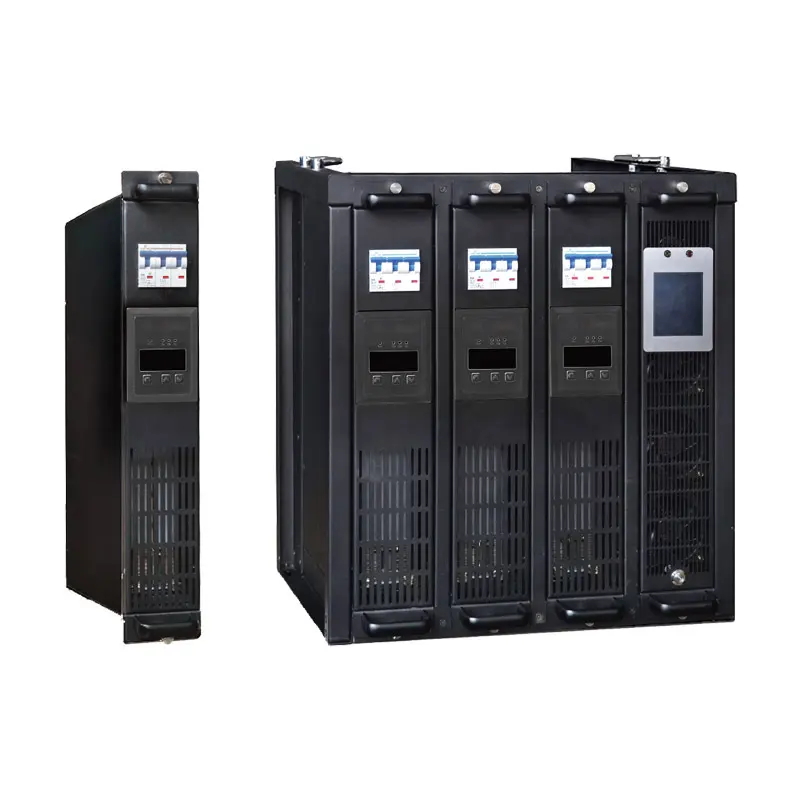
An intelligent power capacitor combines capacitor banks with built-in monitoring, switching control, and protection in one unit. It measures voltage and current in real time, switches steps as needed, and guards against overcurrent, harmonics, and over-temperature conditions no separate controller or contactors required. The aim is simple: improve power factor near the load and cut reactive power charges without a cabinet full of extra parts.
How the Built-In Intelligence Changes Reactive Power Compensation
Traditional correction systems rely on a central controller and multiple contactors switching fixed capacitor banks. Cabling is heavy, fault-finding is slow, and the system logic ignores whether individual stages are actually healthy. An intelligent power capacitor takes a different path. Each unit has its own microprocessor, measurement circuit, and fast semiconductor switch. It senses local load conditions, calculates the reactive power shortfall, and switches at the voltage zero-crossing to minimize inrush and wear.
Multiple units network over a communication bus. If one faults or loses capacitance, it flags the issue and the others pick up the load. No single controller can bring down the whole bank. For anyone who has seen contactor tips weld shut or capacitor cans bulge without warning, that visibility alone makes the upgrade worth considering.
Practical Features That Reduce Site Work
An intelligent power capacitor brings together several functions that previously required separate devices. Key characteristics include:
●Integrated measurement and display – Voltage, current, power factor, and temperature are measured locally and shown on the unit’s interface, so checking system health does not require a portable meter.
●Zero-crossing switching – Semiconductor switches connect and disconnect the capacitor at the voltage zero crossing, eliminating the current surge that shortens contactor and capacitor life in traditional systems.
●Self-protection routines – The unit monitors internal temperature, harmonic content, and capacitor current. If conditions exceed safe limits, it disconnects and signals the fault.
●Networked expansion – Multiple units link together on a bus, creating a scalable reactive power compensation system where the capacity can grow by adding units, not by redesigning a control panel.
●Compact form – Because the switching, protection, and intelligence live in one housing, an intelligent power capacitor bank typically occupies less wall or floor space than an equivalent conventional setup.
Where These Units Deliver the Strongest Benefits
An intelligent power capacitor suits any site where power factor penalties appear on the electricity bill and where electrical loads switch frequently or vary across a shift. Typical installations include:
●Industrial manufacturing plants:Motors, stamping presses, conveyors, and welding equipment create fluctuating reactive power demand. Local compensation with intelligent units tracks the load changes faster than a central controller with contactor delays.
●Commercial buildings:HVAC chillers, pump sets, and elevator drives generate reactive power that an intelligent capacitor stage can compensate near the main distribution board without taking up a whole electrical room.
●Renewable energy sites:Solar inverters and wind turbine converters can shift power factor at the point of interconnection. Intelligent capacitor banks help meet grid code power factor requirements without overcompensating during light generation periods.
●Data centers:UPS systems and server power supplies introduce harmonics that conventional capacitors struggle with. Detuned intelligent power capacitor units with built-in reactors handle the harmonic content while correcting displacement power factor.
●Water and wastewater treatment:Aerator motors, lift pumps, and chemical dosing pumps run on variable schedules. Reactive power demand changes hour by hour, and distributed intelligent compensation follows the load without manual switching schedules.
The consistent thread across these applications is variable loading combined with a cost incentive to keep power factor above the penalty threshold. A fixed capacitor bank is a rough tool for a moving target. An intelligent power capacitor adjusts in near real time and tells the operator when it is no longer healthy.
Installation Factors Worth Considering Early
Putting in an intelligent power capacitor involves more than hanging a box on the wall. The installation point should be as close to the inductive loads as practical, so the cabling between the capacitor and the motors or drives carries compensated current with lower reactive content. This frees up cable ampacity and reduces voltage drop along the run.
Harmonic environment assessment matters before selecting the unit. If the site has significant non-linear loads variable speed drives, rectifiers, LED lighting arrays a standard capacitor unit can form a resonant circuit with the supply transformer inductance at a harmonic frequency. That resonance amplifies harmonic currents and destroys capacitors quickly. An intelligent power capacitor with built-in detuning reactors or active filtering capability addresses this risk from the start.
Network communication wiring between units should be planned before the first module goes in. The bus cable path, termination resistors, and addressing scheme are simpler to set up when the panel is empty than to retrofit after the units are mounted. Labelling each unit with its bus address during installation speeds up later diagnostics.
Maintenance That the Unit Partly Handles Itself
The diagnostic capability inside an intelligent power capacitor shifts the maintenance approach from scheduled manual testing to condition-based monitoring. The unit reports capacitance loss, over-temperature events, and harmonic overloads without an electrician opening the enclosure. A walk-around inspection still matters for checking ventilation, cleaning dust from cooling fins, and looking for any physical damage to the connection terminals or network cables, but the guesswork about which capacitor step is weak disappears.
If a unit signals a fault, the troubleshooting path is shorter. The display or network interface typically points to the specific condition overcurrent, over-temperature, harmonic limit, or capacitance below threshold so the response can be targeted. Keeping a spare intelligent power capacitor on the shelf for critical processes means a swap takes minutes rather than waiting for a service call.
Making Reactive Power Correction Simpler to Manage
An intelligent power capacitor turns power factor correction from a periodic task into something the equipment handles itself. It responds faster, diagnoses its own faults, and expands over a network without redesigning the controls. For sites where reactive power shifts by the hour and penalties hit every month, smarter correction is not about chasing trends. It simply cuts waste, avoids charges, and removes the need to verify operation with a meter every week.
Post time: May-08-2026