


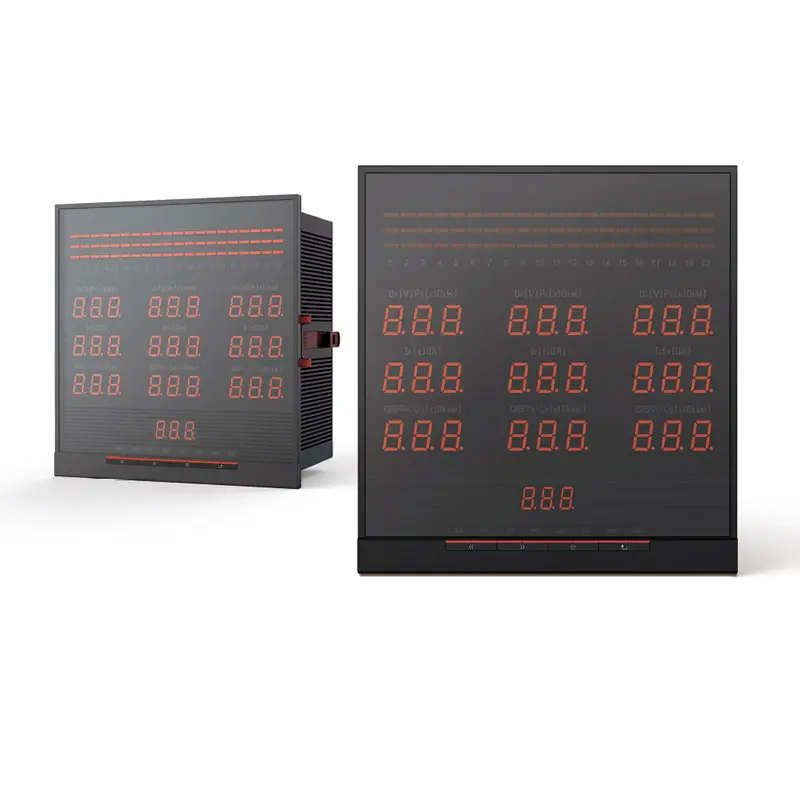
An intelligent controller measures voltage and current, calculates the reactive power demand, and switches capacitor steps or compensation modules to hold the power factor on target. It replaces older relay-based regulators with a processor-driven unit that tracks load changes in real time and adapts to actual network conditions. In a power factor correction cabinet, the controller determines whether the system stays accurate or drifts out of step with the load.
How the Control Logic Has Moved Forward
Early regulators measured phase angle on one phase, compared it to a setpoint, waited through a fixed delay, and switched a capacitor step. Load changes faster than the delay meant late correction. A failed step went unnoticed, forcing healthy stages to overwork or pushing the system into leading power factor.
An intelligent controller works differently. It senses all three phases and calculates reactive power from true RMS values. Switching speed adapts to the load milliseconds for a motor start or welder pulse, slower for gradual building drift to avoid unnecessary operations. It learns each step’s actual kvar output, accounting for capacitor aging, and selects combinations that hit the target with the fewest switches while spreading contactor wear evenly.
On diagnostics, the controller monitors current per step against expectations. Zero current means a blown fuse, open contactor, or failed capacitor. Excessive current signals degradation. It flags faults, timestamps them, and alarms over a communication interface. Maintenance learns about failures from the controller, not from next month’s penalty charge.
Features That Make a Difference on Site
Not every intelligent controller offers the same feature set, but several capabilities separate units that reduce workload from those that only regulate power factor:
●Four-quadrant measurement: Sites with generation, solar export, or regenerative drives need correct power factor measurement regardless of power flow direction. An import-only controller misbehaves during export.
●Harmonic monitoring and protection: The controller tracks voltage distortion and capacitor harmonic current. Above a safe threshold, it disconnects stages to avoid resonance damage. Some units coordinate with detuned or active filters on the same bus.
●Communication ports: Modbus RTU, Modbus TCP, or Ethernet links share real-time data, trends, and alarms with BMS or SCADA no separate power quality meter needed.
●Event and data logging: Onboard memory records sags, harmonics, over-temperature, step failures, and contactor switching counts, helping match production upsets to electrical events and plan preventive maintenance.
●Automatic step detection: At commissioning, the controller identifies connected steps and measures actual kvar output, speeding setup and compensating for aging that shifts delivered kvar from nameplate values.
●Secondary voltage control: While tracking the power factor setpoint, a voltage limit prevents driving the bus beyond safe levels important on weak supplies where adding capacitance raises voltage more than expected.
Where an Intelligent Controller Changes the Outcome
The difference between a basic regulator and an intelligent controller becomes most visible when the electrical load is neither steady nor electrically clean:
●Manufacturing plants with fast-cycling loads: Motors, welders, and drives switch across production cycles in seconds. An intelligent controller holds power factor above the penalty threshold through each transient. A slow regulator lets it dip and recovers only after the reactive demand has passed.
●Sites with harmonic distortion: VSDs, UPS systems, and LED lighting inject harmonics that basic regulators ignore. An intelligent controller with harmonic detection disconnects capacitor stages during overload conditions that would destroy them within weeks.
●Multi-transformer installations: Facilities with multiple incomers and tie breakers need a controller that knows which source feeds which section. Zone-based coordination manages separate banks on different bus sections without them fighting each other.
●Solar-equipped buildings: Rooftop solar may export midday and import at night. A four-quadrant intelligent controller maintains the correct power factor in both directions. Import-only regulators add capacitance during export, potentially breaching the grid agreement.
●Critical sites with backup generators: Hospitals, data centres, and emergency facilities transferring between utility and generator power need a controller that adjusts its setpoint or locks out stages the generator cannot tolerate while running.
In each case, the controller is what keeps the power factor correction system working through the real operating conditions, not just during the steady-state moment when the commissioning engineer packed up and left.
Commissioning Checks That Prevent Misoperation
An intelligent controller measures what it is wired to, so commissioning starts with verifying correct voltage phasing and CT polarity. A swapped phase or reversed CT causes the controller to calculate the wrong power factor and drive the capacitor bank in the wrong direction. Apply a known load, check the displayed power factor, and confirm it matches reality.
CT sizing matters just as much. The maximum load current must stay within the controller’s measurement range without saturating the CT core. A saturated CT during a motor start feeds false current data to the controller, producing reactive power calculations and switching decisions that miss the actual need. Power the controller’s auxiliary supply from upstream of the contactor circuit so it remains live even with the capacitor bank isolator open, keeping communications running and preventing data loss.
Using the Controller’s Own Data for Maintenance
Because the intelligent controller monitors each capacitor step, maintenance shifts from manual inspections to reviewing diagnostic logs. A gradual current drop signals aging and capacitance loss; a sudden drop to zero points to an open circuit. Both appear in the log long before a quarterly walk-around would catch them. Stored contactor switching counts trigger work orders as endurance limits approach, so replacement happens during planned downtime rather than after a welded contactor takes the whole bank offline. Firmware updates applied during annual service add features or improve protocol compatibility without replacing hardware.
Summarize
Capacitors and contactors are standard parts that last when run within their ratings. The intelligent controller decides when to switch, shields them from harm, and flags faults. For sites still on a basic regulator with erratic power factor or surprise penalties, swapping in an intelligent controller often in the same cabinet turns a reactive system into one that keeps pace. It’s not the costliest piece, but it determines whether the whole investment actually cuts reactive power charges.
Post time: May-11-2026