


Improving power factor is essential for efficiency and lower operating costs. Among the devices that support this goal, the capacitor contactor is one of the most important for PF correction banks, enabling safe and efficient switching of capacitor banks to optimize energy use, system stability, and cost. This article discusses the role of capacitor contactors, their specifications and selection criteria, operational challenges, and maintenance tips.
Overview of Power Factor Correction and Capacitor Contactors
The goal of power factor correction is to reduce the amount of reactive power in an industrial and commercial electrical system. This is accomplished by installing capacitor banks in parallel to the loads, which will provide reactive power to even out the power factor and eradicate any charges from the utility. Due to the unique requirements of operating capacitor banks, these units are switched on and off using specially designed devices called Capacitor Contactors, which are capable of handling the high surge current and stress caused from capacitor action.
How Capacitor Contactors Operate in PF Correction Systems
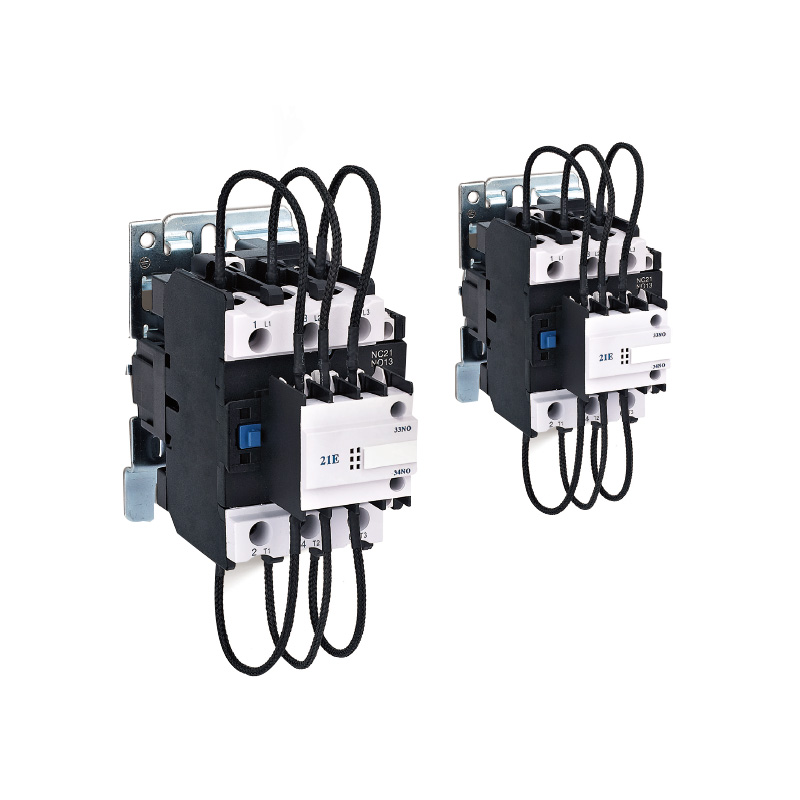
Capacitor Contactor is a device responsible for connecting or disconnecting capacitor banks from the grid depending on system requirement. Whenever it changes status, capacitors can face huge inrush currents, which the ordinary contactor cannot bear. The capacitor duty contactor is equipped specially, it is fitted with certain pre-charging resistors and early-make auxiliary contacts. This allows the device to deal with inrush currents, assuring proper work of the contactor and capacitors without suffering from electrical overload.
The function of contactors in real-time means that capacitors will work when required. The automatic function helps to keep the power factor at the optimal level with the help of contactors and increases the dependability and efficiency of the electrical system.
Key Specifications of Capacitor Duty Contactors
When it comes to choosing the right Capacitor Contactor for your Power Factor correction bank, there are several specifications to keep in mind.
Current and Voltage Ratings: Must align with the bank’s capacity, considering both normal operation and inrush events.
Inrush Current Handling: Capacitor duty contactors have been rated to handle the intense situations of many multiples of inrush rather than the usual loads.
Mechanical and Electrical Endurance: These ratings reflect durability in repetitive switching under stress.
Pre-Charging Features: By making use of built-in resistors or auxiliary contacts, inrush limitation and smooth capacitor switching is ensured which helps reduce transient disturbances.
Standard Compliance: Adherence to IEC, UL, or other standards guarantees performance and safety.
Selection Criteria for Capacitor Contactors
Selecting appropriate contactors involves looking at load analysis, frequency of switching, and environment. The initial steps involve finding out the capacitor bank size and the voltage at which it will operate. In cases where there are frequent switching operations, one should prefer contactors that are durable and have effective inrush protection. Choose contactors that have good compatibility with the automation systems that you are using, particularly in premises where PLCs and energy management systems are already in place. Additionally, ensure that you consider renowned manufacturers that are known for excellent after-sales service and technical support.
Managing Capacitor Switching Transients
The voltage and currents generated during capacitor switching leads to short-lived electrical events called transients which can put the reliability of the system at risk. The advanced designs of capacitors and contactors prevent those transients using resistor pre-charging and time-delay switching to mitigate the impact of those surges. Additionally, in larger installations surge protectors and real-time monitoring are used to protect the installation. Thus, solving the problems of transients contributes to an increase in the lifetime of the electronic devices and protection of the sensitive devices downstream.
Maintenance Tips for Capacitor Switching Contactors
Regular maintenance is essential for maintaining Capacitor Contactor performance:
Inspection: Frequently check housing, terminals, and wiring for damage or heat marks.
Contact Wear: Examine for erosion or pitting due to high inrush currents and replace if necessary.
Mechanical and Electrical Testing: Ensure smooth movement and verify electrical integrity.
Cleaning & Environmental Controls: Keep enclosures dust-free and maintain ideal temperature and humidity.
Proper maintenance scheduling ensures that failures don’t occur while keeping PF correction systems working for a longer period.
Frequently Asked Questions about Capacitor Contactors
Why can’t a standard contactor switch capacitor banks?
Standard contactors suit motors/resistive loads with slow current rise. Switching a discharged capacitor creates huge inrush current that can weld contacts. Capacitor-duty contactors use pre-charge resistors and early auxiliary contacts to suppress this surge.
Does a capacitor contactor protect capacitors?
Only indirectly. It reduces damaging switching inrush and switches the bank on/off. It cannot provide overvoltage, overcurrent or resonance protection; fuses, reactors and filters handle these.
How does switching frequency affect selection?
Each switching cycle wears contacts, and capacitor switching brings heavier stress. Frequent switching requires focus on endurance and surge suppression, not just rated current.
What do detuned reactors do with capacitor contactors?
Reactors prevent harmonic resonance between capacitors and grid inductance. Contactors manage switching transients, while reactors solve steady-state harmonic risks. They cannot replace each other.
The durable Capacitor Contactors is an integral part of power factor correction systems that ensure reliable and efficient switching and protection against electrical damage. By learning about their performance, specifications, selection process, and maintenance requirements, you will be able to provide high power quality, low energy costs, and increased reliability.
Post time: Nov-02-2026