


Motor capacitors are essential components in AC motor systems. They create phase shift, improve starting torque, and ensure smooth operation. This guide covers motor capacitor types, functions, applications, testing, and troubleshooting for engineers, technicians, and buyers.
What Is a Motor Capacitor?
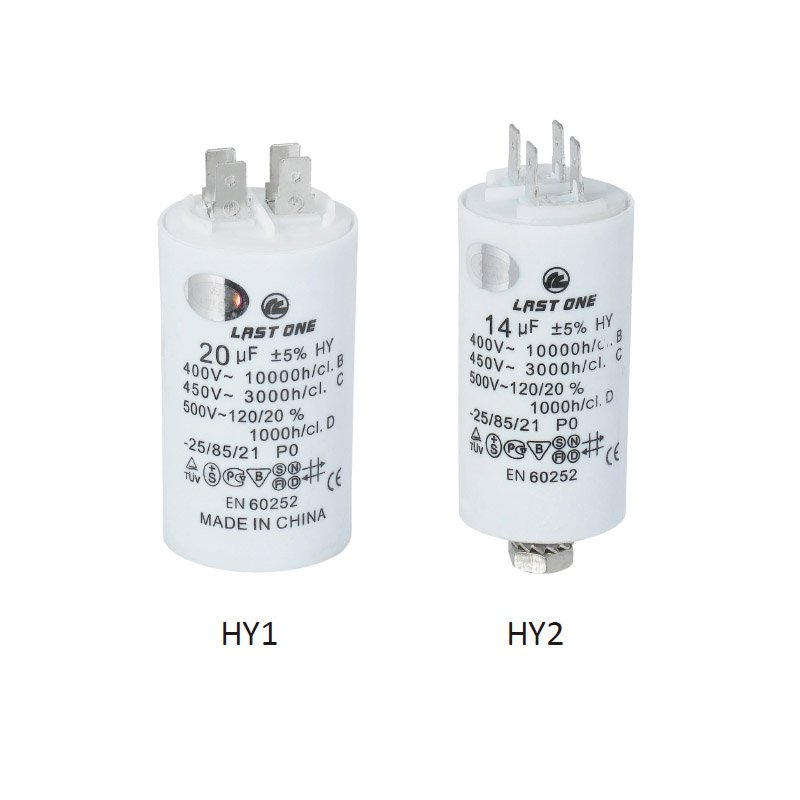
A motor capacitor is an electrical device that stores and releases energy to create a phase shift in AC motor windings. It helps single-phase motors start and run efficiently. Without a proper capacitor, the motor may fail to start, overheat, or lose torque.
How Does a Motor Capacitor Work?
The capacitor creates a phase difference between the start and run windings. This phase shift produces a rotating magnetic field, which allows the motor to start and maintain smooth operation. Run capacitors also stabilize the phase angle during normal operation.
Types of Motor Capacitors
Start Capacitor
Provides a short burst of high torque to overcome inertia during startup. It is disconnected after the motor reaches a certain speed.
Run Capacitor
Remains in the circuit during operation. It maintains phase shift, improves efficiency, and ensures smooth running.
Dual-Run Capacitor
Combines two capacitance values in one case, commonly used in HVAC motors and compressors.
Three-Phase Motor Capacitor
Used for power factor correction and voltage stabilization in three-phase systems.
Start vs Run Capacitor: Key Differences
| Feature | Start Capacitor | Run Capacitor |
| Function | Starting torque | Continuous operation |
| Duration | Short-term | Continuous |
| Capacitance | High (µF) | Lower (µF) |
| Voltage | Higher | Lower |
| Typical Use | Compressors, pumps | Fans, blowers |
Main Applications of Motor Capacitors
● HVAC and refrigeration: compressors, fans, blowers
● Industrial machinery: pumps, conveyors, machine tools
● Home appliances: washing machines, dishwashers, air conditioners
● Automotive: torque improvement and motor operation
● Renewable energy: inverter and motor drive systems
How to Test a Motor Capacitor
● Disconnect power and discharge the capacitor safely.
● Set a multimeter to capacitance mode.
● Measure across the terminals.
● Compare with the rated µF value.
● Replace if reading is low, or if bulging or leakage is visible.
Common Problems and Troubleshooting
| Problem | Possible Cause | Solution |
| Motor won’t start | Failed start capacitor | Replace capacitor |
| Overheating | Weak run capacitor | Test and replace |
| Noise or vibration | Wrong capacitance | Match correct rating |
| Frequent tripping | Voltage mismatch | Check voltage rating |
| Short lifespan | High temperature | Improve ventilation |
Maintenance and Replacement Tips
● Inspect capacitors every 6–12 months.
● Discharge before handling.
● Replace both start and run capacitors if one fails.
● Keep records of replacements and test results.
● Use OEM or equivalent-quality parts.
FAQs About Motor Capacitors
Can I use any capacitor with my motor?
No. It must match voltage, capacitance, and frequency ratings.
How do I find the right capacitor?
Check the motor label or manual, or contact the manufacturer.
When should I replace a capacitor?
When readings are low, or if bulging, leaking, or overheating occurs.
Can a bad capacitor damage a motor?
Yes. It can cause overheating, torque loss, and winding damage.
Post time: Oct-19-2026