


In today’s low-voltage power grids, harmonic pollution and reactive power loss are major pain points for industrial and commercial users, harming power quality, increasing energy consumption and damaging electrical equipment. For buyers investing in low voltage power capacitor products, the intelligent combined anti-harmonic low voltage power capacitor is a targeted solution integrating intelligence, anti-harmonic performance and reactive power compensation.
Development History
The evolution of intelligent combined anti-harmonic low voltage power capacitor is closely tied to the increasing complexity of power grids and rising demands for energy efficiency. In the early stages of low voltage power capacitor development, basic reactive power compensation products dominated the market. However, with the widespread use of non-linear loads (such as frequency converters, rectifiers, and electronic equipment), harmonic pollution became increasingly severe. Traditional capacitors were highly susceptible to harmonic overvoltage and overcurrent, leading to shortened service life, frequent failures, and even fire hazards.
To address this issue, anti-harmonic technologies were integrated into low voltage power capacitors in the late 20th century. Early anti-harmonic capacitors mainly relied on series reactors to suppress specific harmonics, but they lacked intelligence—requiring manual adjustment and monitoring, which was inefficient and prone to errors. The 21st century witnessed the advent of intelligent upgrades: manufacturers integrated microprocessors, communication modules, and real-time monitoring functions into the products, giving birth to the intelligent combined anti-harmonic low voltage power capacitor. This generation of products can automatically detect grid parameters, adjust compensation capacity, and transmit operational data remotely, marking a leap from “passive protection” to “active management” of power quality.
Solving User Pain Points
The core value of intelligent combined anti-harmonic low voltage power capacitor lies in its ability to address the dual challenges of harmonic pollution and reactive power loss. Here‘s how it solves key user pain points:
1. Suppressing Harmonics and Protecting Equipment: By integrating series reactors with appropriate reactance ratios (common 7%/14%), the capacitor effectively filters out major harmonics (e.g., 3rd, 5th, 7th) in the grid. This prevents harmonic amplification, avoids overheating and breakdown of capacitors and other electrical components, and significantly extends the service life of power equipment—reducing maintenance and replacement costs for users.
2. Improving Power Factor and Reducing Energy Costs: Reactive power loss in the grid leads to low power factor, which often results in penalty fees from power utilities. The intelligent combined anti-harmonic low voltage power capacitor automatically compensates for reactive power according to real-time grid load changes, raising the power factor to the standard range (usually above 0.95). This not only eliminates penalty fees but also reduces line losses, lowering overall energy consumption.
3. Intelligent Operation for Efficient Management: Equipped with intelligent control modules, the product can monitor voltage, current, power factor, and harmonic content in real time. It realizes automatic switching of compensation groups, remote data transmission, and fault alarm functions. Users can manage the device through a central control system without on-site manual operation, improving management efficiency and reducing labor costs.
4. Flexible Compensation Methods for Diverse Needs: Different application scenarios have varying load characteristics—some require three-phase balanced compensation, while others need split-phase compensation for unbalanced loads (e.g., commercial buildings with large single-phase lighting loads). Advanced intelligent combined anti-harmonic low voltage power capacitors offer both options, ensuring optimal compensation effects in different scenarios.
Mainstream Market & User Demands
The mainstream market for intelligent combined anti-harmonic low voltage power capacitor is concentrated in industries and scenarios with high non-linear load ratios and strict requirements for power quality. Key market segments include:
- Manufacturing Industry: Factories with large-scale use of frequency-converted motor drives, welding equipment, and automated production lines (e.g., automotive manufacturing, electronics assembly, and textile mills) have high harmonic content. Users here prioritize product reliability, long service life, and automatic adaptation to load changes.
- Commercial Buildings: Shopping malls, office buildings, and hotels equipped with central air conditioning, elevators, and a large number of electronic devices (computers, lighting systems) need to reduce energy consumption and ensure stable operation of sensitive equipment. Compact size, easy installation, and low noise are additional demands for these scenarios.
- Renewable Energy Fields: Solar and wind power generation systems generate harmonics during energy conversion. Intelligent combined anti-harmonic low voltage power capacitors are used to optimize power quality and ensure smooth grid connection.
- Data Centers: High-density server clusters and UPS systems produce significant harmonics. For data centers, 24/7 stable operation, precise compensation, and real-time fault alarm functions are critical.
Across these markets, common user needs include: effective harmonic suppression to protect equipment, improved power factor to avoid penalty fees from power supply companies, intelligent operation to reduce manual maintenance costs, and flexible compensation methods to adapt to different load types.
Reliable Option: Lastone’s Product
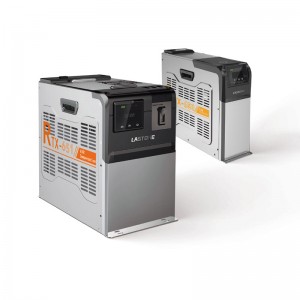
When selecting an intelligent combined anti-harmonic low voltage power capacitor, product performance and brand reliability are key considerations for buyers. Lastone’s intelligent combined anti-harmonic low voltage power capacitor is specifically designed for grids with high harmonic content, perfectly aligning with the core needs of users in high-harmonic scenarios.
The product boasts the following key features that address practical user demands: It meets reactive power compensation requirements, effectively improves power factor, and simultaneously suppresses harmonics to enhance power quality. To adapt to different load conditions, it offers two compensation methods: three-phase compensation (models HYBAGK/HYBAGK-A) for balanced loads and split-phase compensation (model HYBAFK) for unbalanced loads. Additionally, it provides flexible reactance ratio options (7%/14% etc.), allowing users to select the most suitable configuration based on specific harmonic conditions in their grids. With stable performance and intelligent operation, it is a trustworthy choice for industrial and commercial users seeking long-term, low-maintenance power quality solutions.
Conclusion
The intelligent combined anti-harmonic low voltage power capacitor has become a core component in modern low-voltage power quality management, evolving with the needs of increasingly complex power grids. For buyers, understanding its development history and mainstream market demands helps in making informed purchasing decisions. By focusing on products that prioritize harmonic suppression, intelligent operation, and flexible compensation, users can effectively solve power quality issues, reduce energy costs, and protect electrical equipment. Whether for manufacturing, commercial buildings, or renewable energy applications, choosing a reliable intelligent combined anti-harmonic low voltage power capacitor is an investment in long-term power grid stability and efficiency.
Post time: Dec-26-2025