


Reliable and repeatable switching is the basis of industrial automation. Mechanical switches tend to fail with heavy usage, especially in tough environments characterized by speed, dirt, humidity, or vibration. Dynamic contactless switch solves this problem by detecting motion, positioning, or presence without direct contact.
What Is a Dynamic Contactless Switch?
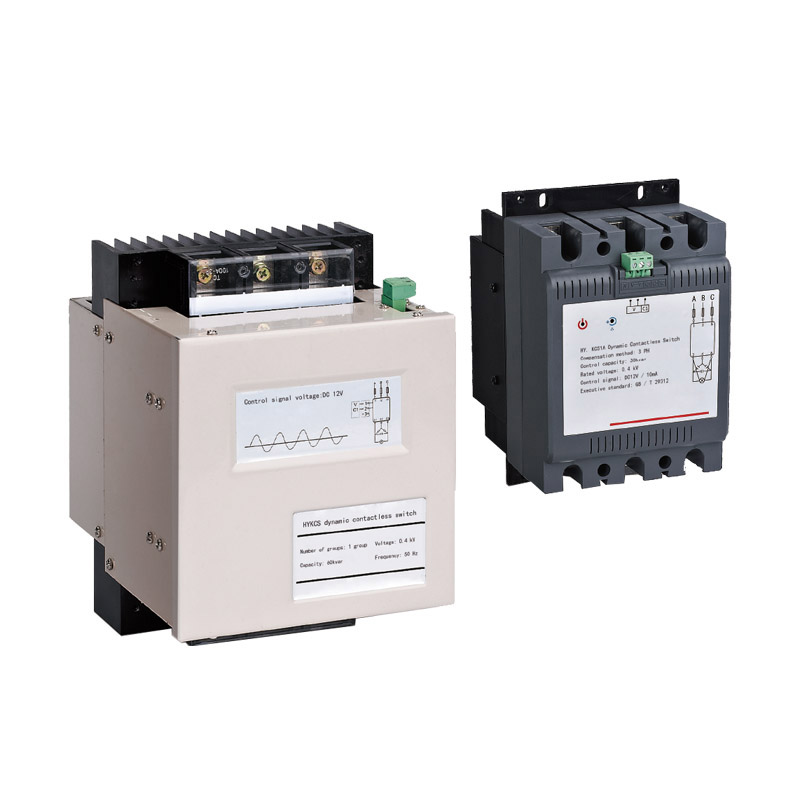
A dynamic contactless switch is an electronic device that is capable of varying its output in response to the presence of its target or movement within the certain sensing range. In contrast to a mechanical limit switch, it does not require the use of a lever, spring, or a physical actuator to create contact with the target.
These type of switches utilize sensoring technologies like induction, magnetism, photoelectric, capacitive, ultrasonic, or RFID. These can be associated with PLCs, relays, alarms, motors, valves etc.
How Non-Contact Switching Works
Non-contact switches utilize an electronic sensing field, a light ray, a magnetic field, or a signal zone. The moment the object enters, exits, blocks, reflects, or modifies that zone, the switch produces an output signal for the control unit.
An inductive sensor is an example of a device that detects metals using electromagnetic fields. Furthermore, a magnetic sensor detects a magnet attached to a moving cylinder or component. Finally, photoelectric sensors use light to detect objects, even if they are not metal-based.
What Is a Dynamic Contactless Switch?
A dynamic contactless switch is an electronic device that is capable of varying its output in response to the presence of its target or movement within the certain sensing range. In contrast to a mechanical limit switch, it does not require the use of a lever, spring, or a physical actuator to create contact with the target.
These type of switches utilize sensoring technologies like induction, magnetism, photoelectric, capacitive, ultrasonic, or RFID. These can be associated with PLCs, relays, alarms, motors, valves etc.
How Non-Contact Switching Works
Non-contact switches utilize an electronic sensing field, a light ray, a magnetic field, or a signal zone. The moment the object enters, exits, blocks, reflects, or modifies that zone, the switch produces an output signal for the control unit.
An inductive sensor is an example of a device that detects metals using electromagnetic fields. Furthermore, a magnetic sensor detects a magnet attached to a moving cylinder or component. Finally, photoelectric sensors use light to detect objects, even if they are not metal-based.
Benefits of Wear-Free Operation
The most significant benefit of this type of contactless switch relies on the absence of wear. There is no repeated usage of mechanics and hence the switch is capable of functioning steadily for a much longer period of time.
● Longer operating life in high-cycle applications
● Less maintenance and fewer replacement parts
● Fast response for high-speed equipment
● Reliable operation in dusty, wet, or vibration-heavy areas
● Reduced risk of contact bounce and mechanical failure
For machines that work constantly or are hard to reach for the purpose of maintenance, this is one of the advantages of this power switch that is operated without contact.
Best Industrial Applications
Dynamic non-contact switches are broadly utilized in manufacturing, packaging, logistics, robotics, automobile manufacturing, food processing, and material handling. Usual applications are conveyor monitoring, product counting, cylinder position detection, guarding of machinery, automatic doors, verification of fixtures, and positioning of robots.
In the packing lines, contactless devices are capable of realizing the presence of bottles, cartons, labels, etc. and the position of products with high speed. In pneumatic systems, magnetic sensors can determine whether the cylinder is in the extended or retracted position. On conveyors, sensors assist in the tracking of products and automation of different processes.
Choosing the Right Contactless Device
Choose the appropriate sensor based on the target material type, the distance being measured, the operations speed, the output type of the sensor, and the environmental factors present. Induction sensors are ideal for metals, while magnetic sensors can be used for objects with magnets and moving parts. The photoelectric sensor works well at longer distances and in cases where a variety of materials are considered.
It is important to examine the IP rating, the range of temperature, type of cable, supply voltage, and output configuration, whether it is PNP or NPN. For tough industrial situations, it is necessary to go with a sturdy casing that provides needed protection against sand, water, oil, and vibrations.
FAQ
What Is a Dynamic Contactless Switch?
It’s an electrical switch that senses occupancy, motion, or location without having a direct touch point, and transfers the control signal to the connected devices.
How Does Non-Contact Switching Work?
It can notice what happened previously to light beam, sensing field, electromagnetic waves, or signal area. The switch’s output state changes after detection of the objective.
Where Is It Used?
It finds application in conveyor systems, packaging machines, robot systems, pneumatic cylinders, assembly lines, automatic doors, and tools for material handling.
To summarize, Dynamic contactless switch provides quick and precise switching while also being reliable without the disadvantages of a mechanical switch. Moreover, by using suitable technology and installation, it can bring down the downtime, optimize automation and ensure efficiency in industrial performance over the years.
Post time: Sep-07-2026