


In the field of electrical engineering, one cannot overlook the importance of Power Quality Cabinets and Automatic Power Factor Correction (APFC) panels; because both are key contributors to enhancing energy use and reliability. Although they serve similar purposes by improving energy use, they provide very different services and can create confusion for users. This article will review these systems to allow you, as a business or professional, to make better informed choices.
What is an APFC Panel?
APFC (Automatic Power Factor Correction) is a device that automatically optimizes the power factor of an electrical supply. Specifically, the power factor is defined as the ratio of real power (used to perform an amount of work) to apparent power (the sum of all power supplied to the circuit). By having a low power factor, an electrical system will incur unnecessary energy losses, increased electrical costs, and possible penalties imposed by utilities.
The APFC panel works by automatically switching on and off capacitors that are connected to the electrical system, in order to maintain a power factor at or near unity (1.0). The three main benefits of a properly functioning APFC panel include:
- Reduces electrical costs by reducing the amount of reactive power consumed.
- Improves operational efficiency.
- Reduces stress and prolongs the life of electrical equipment.
- The ability to avoid penalties from utility companies due to low power factor.
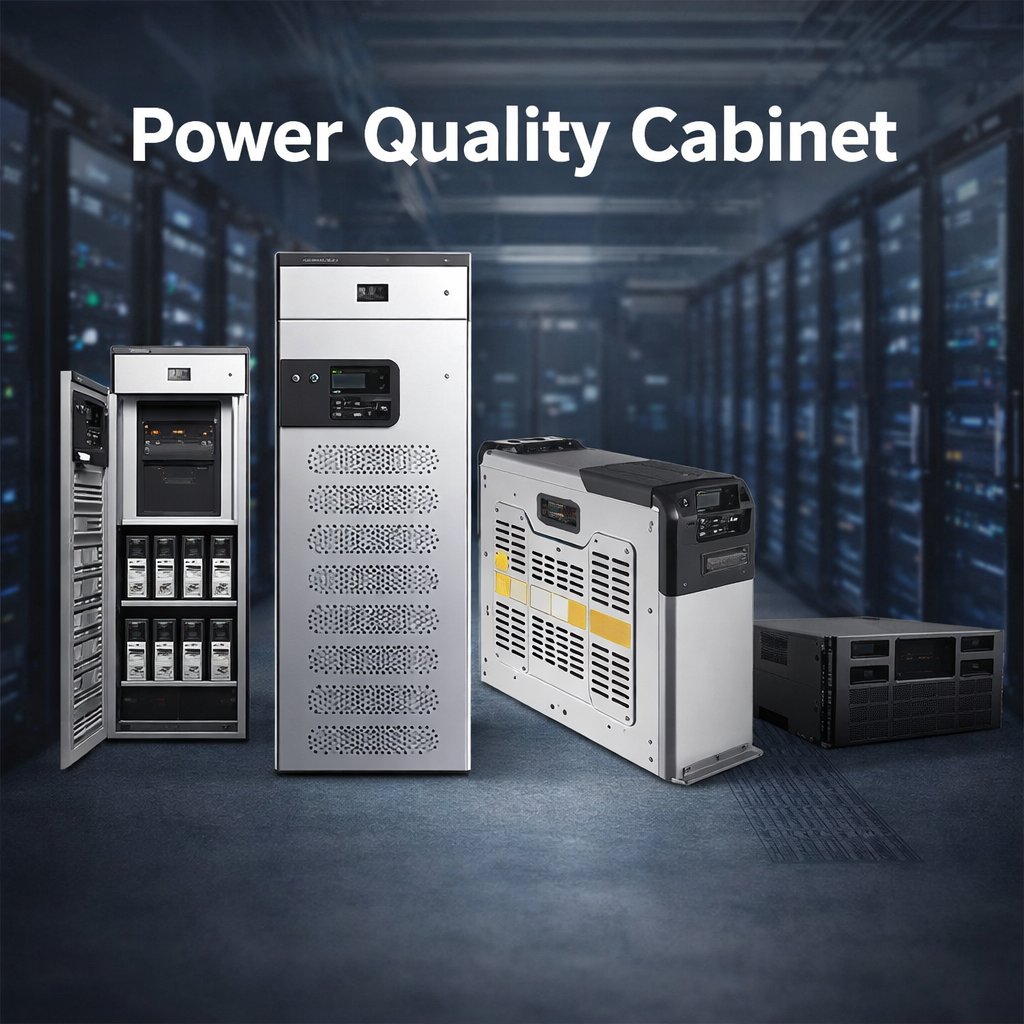
What is a Power Quality Cabinet?
A Power Quality Cabinet is a system that was developed to correct a wider variety of power quality problems than an APFC panel can provide. Quality of power is defined as the stability of the power supply, as well as the reliability of the power supply, as a result of different aspects of the supply including, but not limited to, voltage variances (fluctuations in voltage), harmonic distortion (effects of harmonic voltage sources from nonlinear loads), fluctuations in frequency, and other forms of electrical disturbances.
These cabinets contain a variety of components that address both of the challenges described previously by providing:
- Harmonic filters to reduce distortion caused by non-linear loads.
- Voltage stabilizers to provide a more consistent supply voltage.
- Reactive power compensators to assist in the improvement of power factor.
- Surge protectors to protect sensitive equipment from damage.
By enabling effective management of multiple aspects of electrical supply performance, Power Quality Cabinets help to create a safe and effective electrical infrastructure for complex buildings and critical operations.
Key Differences Between APFC Panels and Power Quality Cabinets
Although both types of systems help to improve electrical performance, they each have very different focus areas. Here’s an outline of the key differences:
| Feature | APFC Panel | Power Quality Cabinet |
|---|---|---|
| Primary Purpose | Improves power factor through compensating for reactive power | Manages all aspects of power quality including power factor, harmonic distortion, and stable voltage |
| System Components | Capacitors, contactors, and a controller | Harmonic filters, capacitors, voltage stabilizers, and surge protection devices |
| Target Audience | Best for users with mainly issues of power factor penalties | Best for users with sensitive or more complex power requirements |
| Cost | More accessible for single-issue corrections | Higher cost, but offers more total solutions and features |
Connections Between APFC Panels and Power Quality Cabinets
APFC and Power Quality Cabinets are two unique items but have functionally similar purposes. In many of the advanced systems, the Power Quality Cabinet will include the APFC, giving the user both power factor correction and an overall solution for power quality.
For example, facilities that have a great need for both improving the power factor and reducing harmonic distortion would benefit from the overall solution provided by the Power Quality Cabinet. A standalone APFC panel would only be suitable for smaller installations with the sole purpose of improving only the power factor.
When to Choose Each System
Choosing between an APFC panel or Power Quality Cabinet will be based on your specific needs. Below are some simple guidelines:
- APFC Panel: If your primary concern is the avoidance of penalties for a poor power factor, and your electrical system has no harmonics or voltage instability.
- Power Quality Cabinet: If you require a total solution for your power quality issues, such as harmonics, flickers, voltage sags, etc., especially for heavier or more sensitive electrical loads in your industry.
FAQs About APFC Panels and Power Quality Cabinets
Can a Power Quality Cabinet replace an APFC Panel?
Yes, a Power Quality Cabinet could replace an APFC panel and exceed its functionality if it includes a power factor correction function; however, if you only have simple power factor correction needs, then using a standalone APFC panel may be a better choice, since it will be less expensive than using a Power Quality Cabinet.
What is the largest advantage of using a Power Quality Cabinet?
Power Quality Cabinets not only provide power factor correction, but they also help to ensure the electrical systems are stable and operate efficiently by minimizing problems such as harmonic disturbances, voltage fluctuations, and power surges.
Will APFC Panels help resolve harmonic distortion problems?
No, APFC panels do not provide a solution to harmonic distortion. To solve this problem, you will need to install dedicated harmonic filters or Power Quality Cabinets with harmonic filtering capacities.
In which industries are Power Quality Cabinets mostly beneficial?
Manufacturing plants, data centers, hospitals, and facilities with variable or sensitive loads are often the most favored users of Power Quality Cabinets, as they provide complete power conditioning.
To summarize, it is pertinent to know the differences and connections between APFC panels and Power Quality Cabinets if you wish to maximize energy efficiency and maintain reliable power systems. Whether you select an APFC panel or a Power Quality Cabinet will depend on your unique electrical needs; both can improve system performance while decreasing operational costs.
Post time: Apr-01-2026