


The electric and electronic system relies heavily on the capacitor for its operation. Capacitance is used in various applications from small electronic circuit boards to larger industrial machinery; however one question comes up often: “Do We Use Capacitors With AC Or DC?” This article provides a comprehensive look at this issue, as well as“typical uses” of capacitors within AC & DC circuits, and many other topics as well. Read on to learn everything there is to know about the capacitor and its use!
What Is a Capacitor and How Does It Work?
Capacitors are passive electronic devices that may be used to store and discharge electrical energy. Capacitance is defined as the measure of a capacitator’s ability to hold a charge based on two conductive plates, which are separated by an insulator. When two conductive plates are connected to a voltage source, an electric field builds between the plates, and the energy is stored as an electric charge in the capacitor. The functions and purposes of capacitors vary based on whether they are being used in an AC or DC circuit.
Do Capacitors Work in AC or DC Circuits?
It’s easy: Capacitors can operate with either AC or DC, but perform different tasks in each circuit type. In a DC circuit, capacitors are primarily used for energy storage purposes, creating a smoothing effect by cancelling out voltage fluctuations.
Their most common application is in power supplies where they help maintain voltage stability while also filtering out unwanted noise.
In alternating current circuits, volt-amps are used to correct the power factor, filter out signals, store energy, and phase-correct. Induction motors and air conditioners require them to provide the initial torque to start operating and to control alternating current flow in both these instances.
Understanding AC and DC Capacitors
Capacitors can be utilized for many applications. The construction of a capacitor will differ depending upon whether the capacitor is intended for use in an A.C. circuit or a D.C. circuit. The following paragraphs describe these two types of capacitors in more detail.
AC Capacitors
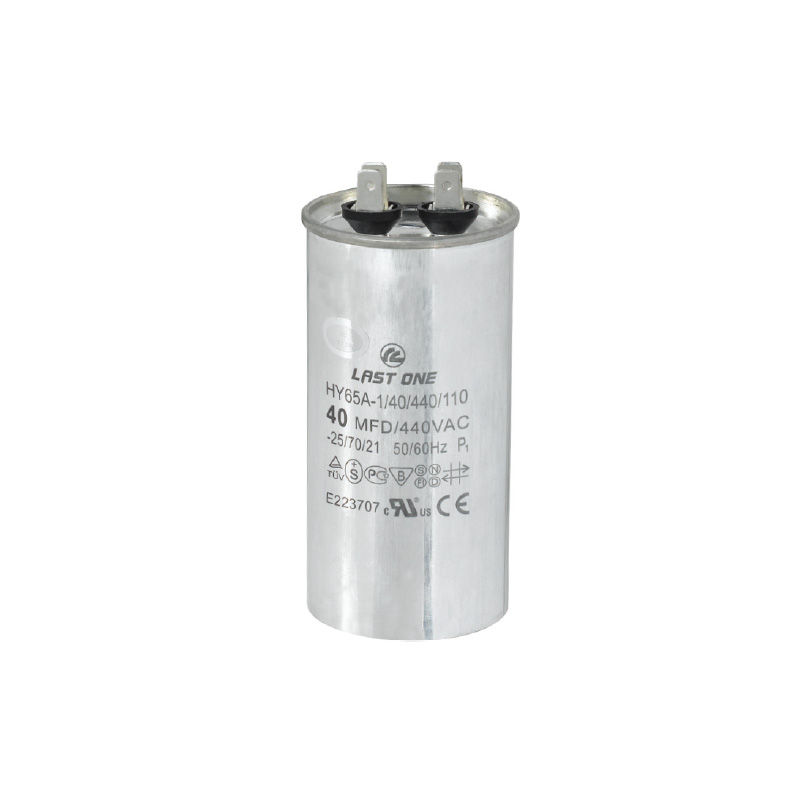
AC capacitors are designed to tolerate the constant changes of polarity that happen with alternating current. Ceiling fans, air conditioners, and electric motors generally use these capacitors. An AC-capacitor is important for starting & maintaining efficiency by starting & running the motor. AC capacitors are often cylindrical and rated for high voltages.
DC Capacitors
Single polarity DC capacitors are most often utilized in single polarity voltage circuits, typically in applications where they will provide voltage smoothing and stabilization to DC power supplies. Unlike AC capacitors, DC capacitors can also hold a charge and discharge it to maintain a constant voltage on a DC power supply.
How to Identify an AC or DC Capacitor?
To tell whether a capacitor is intended for use with an AC power supply or with DC voltage is simple if you pay attention to these features:
●Inspect the capacitor markings for whether it is classified as an AC capacitor (as indicated by “AC,” “A/C,” or similar) or a DC capacitor (marked by a nominal voltage as well as “DC”).
●The form and design of both types of capacitors differ substantially; AC capacitors are typically larger and cylindrical in shape whereas DC Capacitors may also come in smaller, more compact geometries.
●AC capacitors are rated to handle alternating voltage and have correspondingly higher voltage ratings than DC caps which are rated for DC use and unidirectional (one way) current only.
Can an Air Conditioner Run Without a Capacitor?
Without an operational capacitor, an air conditioner won’t work efficiently. AC unit capacitors are important because they provide the initial power needed to start both the compressor and the blower motor. If the capacitor is not operating, the compressor won’t likely start, thus causing the AC system to not work. We recommend contacting an expert HVAC technician to check your capacitor if it appears to be defective; therefore preventing potential electrical damage to other components of the AC system.
The Role of Capacitors in Motor and Power Systems
Capacitors are very important components in power and motor systems, especially for AC applications. For example, motor start capacitors provide needed startup torque for an electric motor to begin operation. Motor run capacitors help an electric motor run smoothly once it is started. Capacitors in power systems are generally used for power factor correction to enhance energy efficiency and reduce power loss.
Common Questions About Capacitors
Do capacitors work in both AC and DC circuits?
Capacitors can function in both AC (alternating current) and DC (direct current) circuits; however, they are manufactured and designed differently depending on what type of current they are supposed to be used with.
How do I identify an AC or DC capacitor?
Capacitor identification, based on label (AC versus DC) and voltage ratings. Generally, AC capacitors are larger and used for the management of alternating current; whereas DC capacitors are designed for the management of one-directional current.
What happens if a capacitor fails?
When a capacitor fails, any system depending on it will typically not operate properly. For example, if the capacitor used in an air conditioner fails, the compressor or fan motor may be unable to turn on. Likewise, a failed capacitor can create unstable power output or problems with operation within a DC circuit.
Conclusion
Capacitors work similarly in both AC and DC circuits, serving various purposes such as energy storage, power factor correction, or voltage stabilization. While AC and DC capacitors differ in design and specific functions, both are essential to the performance of electronic and electrical systems. Understanding how capacitors work helps with troubleshooting, optimizing system performance, and extending equipment life. For AC capacitors, always consult a professional to ensure optimal performance and safe operation.
Post time: Jun-17-2026